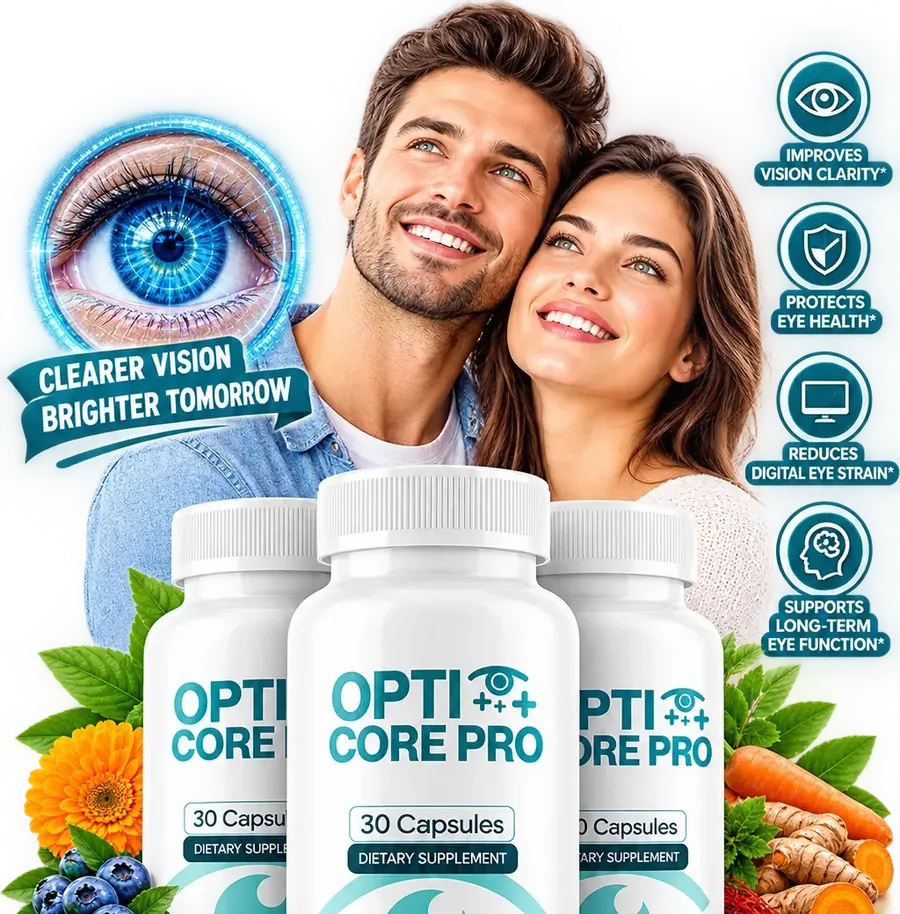
When people search for OptiCore Pro benefits, they're usually trying to answer one practical question: what is this daily capsule actually formulated to support? The honest answer starts with the label, not the marketing copy. OptiCore Pro combines 16 individually declared vitamins and minerals with a 179.5 mg proprietary botanical blend, and every benefit worth discussing traces back to that panel.
Everyday Vision Nutrition, Not a Cure
It's worth saying plainly: no dietary supplement, OptiCore Pro included, can cure an eye condition or guarantee sharper eyesight. What the formula is built to do is supply nutrients with an established role in normal visual function — primarily vitamin A (as beta-carotene) and zinc. Vitamin A is necessary for normal vision, and zinc plays a role in normal visual function alongside broader immune and cellular support. Supplying these nutrients supports normal nutrition; it does not override genetics, injury, disease, or how many hours a day you spend on a screen.
Antioxidant Nutrition for Digital-Era Eyes
Vitamin C and vitamin E are both included on the label, and both contribute to the body's everyday antioxidant systems. Antioxidants help manage oxidative stress, which is a normal part of cellular activity — including in eye tissue that's exposed to light and screen glare for long stretches. This is general nutritional support, not a clinical treatment for a specific condition like macular degeneration.
A Full B-Complex for Sustained Focus
Thiamin, vitamin B6, folate, vitamin B12, biotin, and pantothenic acid make up a complete B-vitamin group on the OptiCore Pro label. These nutrients support normal energy metabolism and nervous system function, which matters when you're trying to stay focused through a long workday of near-work and screen time. None of this is eye-specific science — it's foundational nutrition that supports the systems your eyes rely on.
The 11-Botanical Blend
Beyond the core vitamins and minerals, OptiCore Pro includes a 179.5 mg proprietary blend of 11 botanical ingredients: PABA, horsetail extract, Fo-Ti, bamboo extract, stinging nettle, Chinese peony, spirulina, saw palmetto, plant sterols from soy, alfalfa, and barley grass. Because the label states a combined weight rather than individual amounts, it's not possible to know exactly how much of any single plant is in each capsule. That's a meaningful transparency limitation worth factoring into your expectations. See our complete ingredients guide for a full breakdown of each botanical.
A Simple, Repeatable Routine
One underrated benefit of OptiCore Pro is pure practicality: it's one vegetable capsule, taken once a day with water, ideally 20–30 minutes before a meal. A single-capsule format is easier to maintain consistently than a multi-pill regimen, and consistency is what everyday nutrition actually depends on — a supplement taken sporadically is unlikely to tell you much either way.
What OptiCore Pro Is Not
OptiCore Pro is not the AREDS2 clinical formulation studied for specific stages of age-related macular degeneration — it does not list lutein, zeaxanthin, or copper. It's also not a replacement for a dilated eye exam, corrective lenses, or any prescribed treatment. If you notice sudden vision changes, flashes, floaters, or eye pain, that calls for prompt professional care, not a supplement trial.
The Bottom Line
The realistic benefit case for OptiCore Pro is nutritional support for everyday eye wellness — delivered through a transparent, amount-labeled formula in a simple daily capsule. For the complete amount-by-amount ingredient list, visit our ingredients page, or read how the formula is positioned on the official product overview. For routine-fit feedback, see OptiCore Pro reviews or the related article on how the formula works.